Introduce a known reference.
A repeatable physical object gives the machine something precise to reveal.
Physics measured. Machine specific.
Smearlets maps how an imaging system blurs and stretches reality—then uses those measurements to recover sharper, more trustworthy output.
01 / The problem
Every imaging machine has limitations that distort reality. Some information is softened, stretched, or hidden before a clinician ever sees the image.
estimated new cancer diagnoses in the United States in 2025—about 5,600 every day.
Early detection and precise treatment depend on image quality. Resolution can be the difference between detection at an early stage and detection at an advanced stage.
02 / The method
We place a known calibration object in the imaging field. How that object changes tells us what the machine is doing at every point.
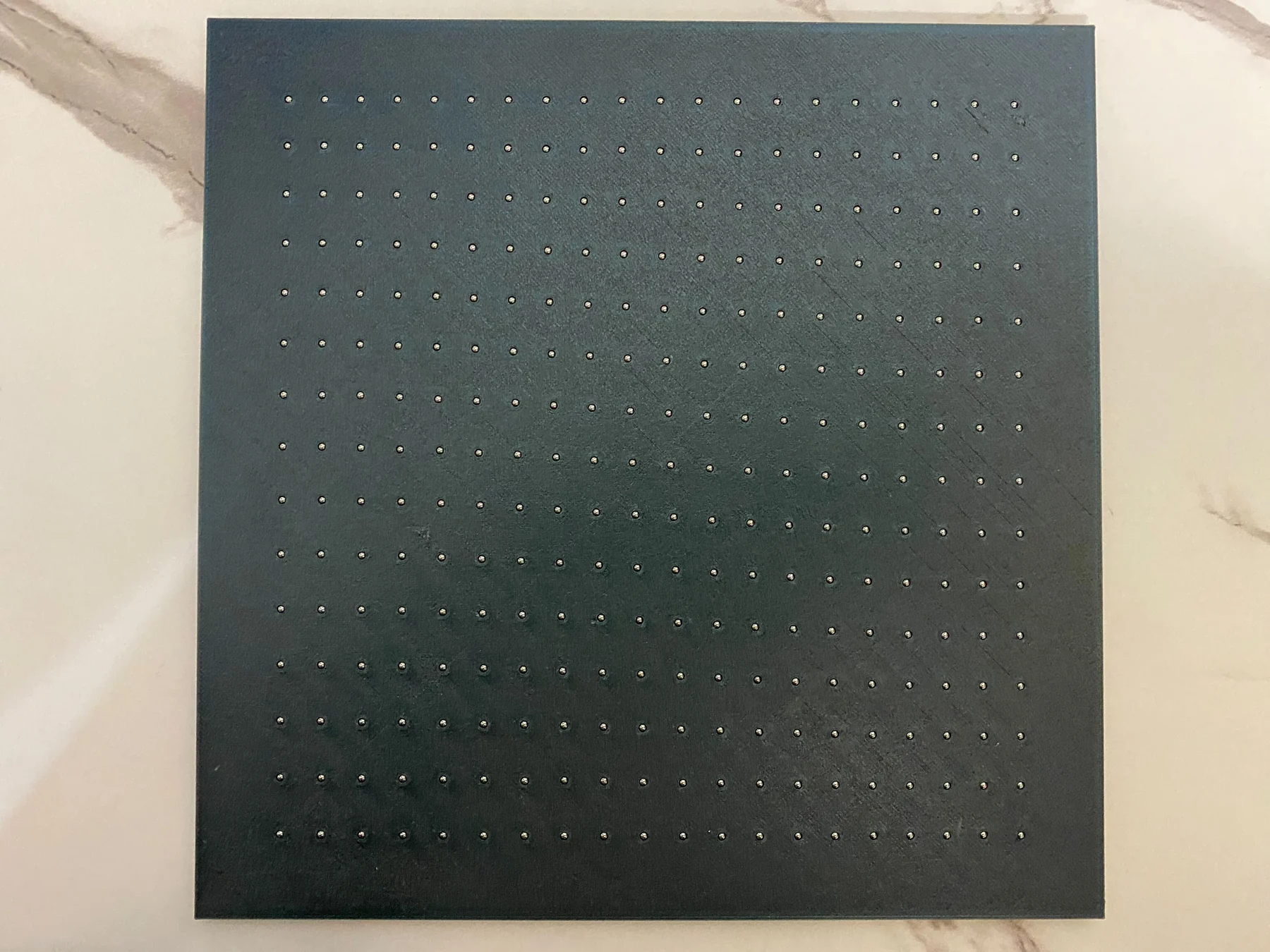
A repeatable physical object gives the machine something precise to reveal.
Each sphere becomes a local measurement of scale, anisotropy, and orientation.
Mathematics converts those measurements into a machine-specific map.
The correction layer improves output using measured physics, not generated features.
03 / Proof of concept
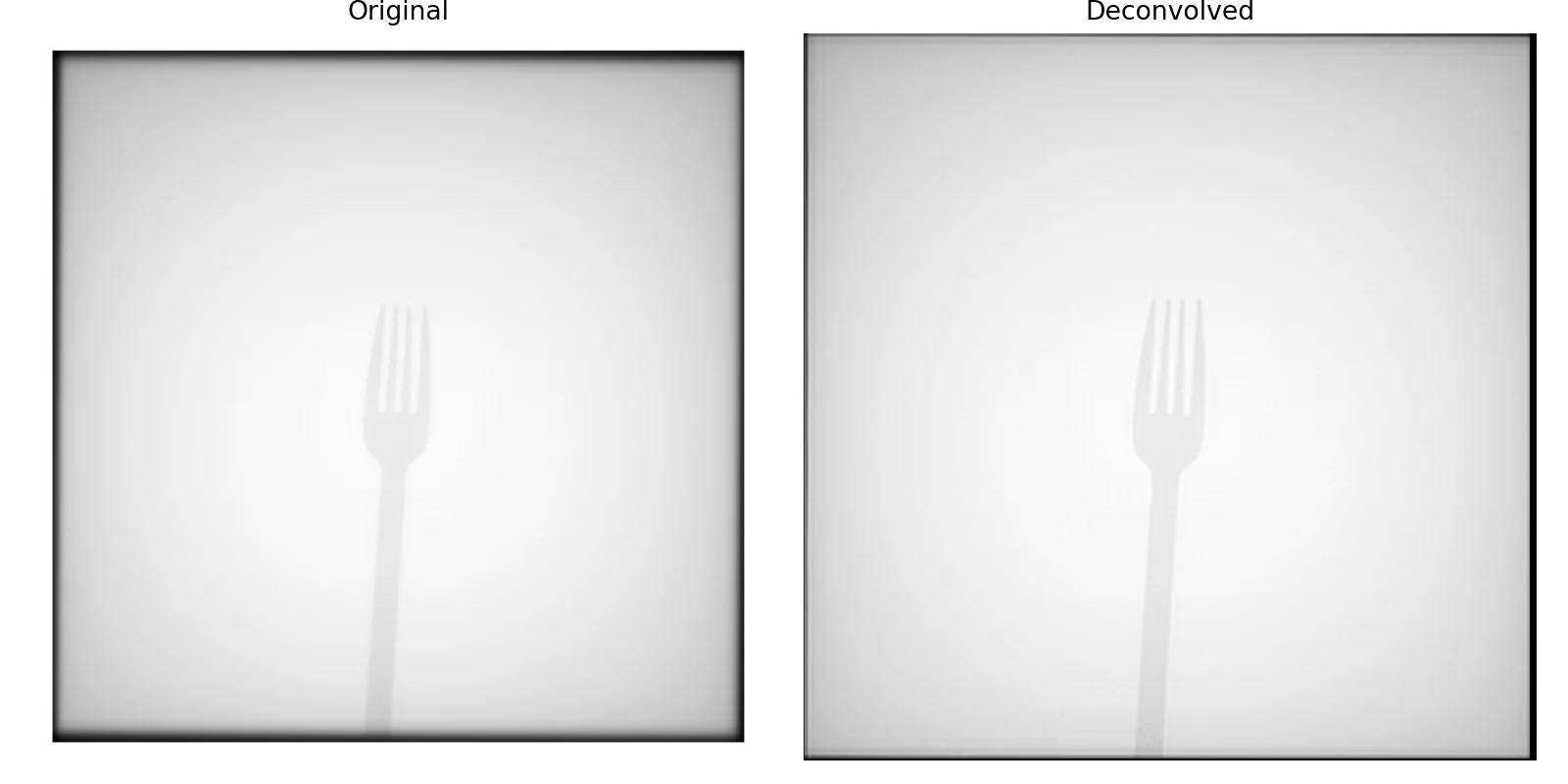
Demonstrated on linear accelerator (LINAC) images. Drag the divider to inspect the original and corrected output.
04 / Product vision
Smearlets is envisioned as a calibration kit and software platform. The widget adapts to the machine; the underlying approach remains consistent.
Our approach is anchored to a measured physical reference.
We map local distortion across the field.
We are building an adaptable calibration and software layer.
05 / Team

CEO / Medical Physics
COO / Astrophysics + Software
06 / What’s next
We are expanding Smearlets from a successful LINAC demonstration toward multi-machine validation and a broader medical-imaging platform.
We are open to conversations with investors, research partners, medical institutions, and strategic collaborators who see where this can go.